Fibre Laser vs CO2 Laser: Which Is Right for Metal Cutting?

DXF File Preparation for CNC Cutting
October 21, 2026
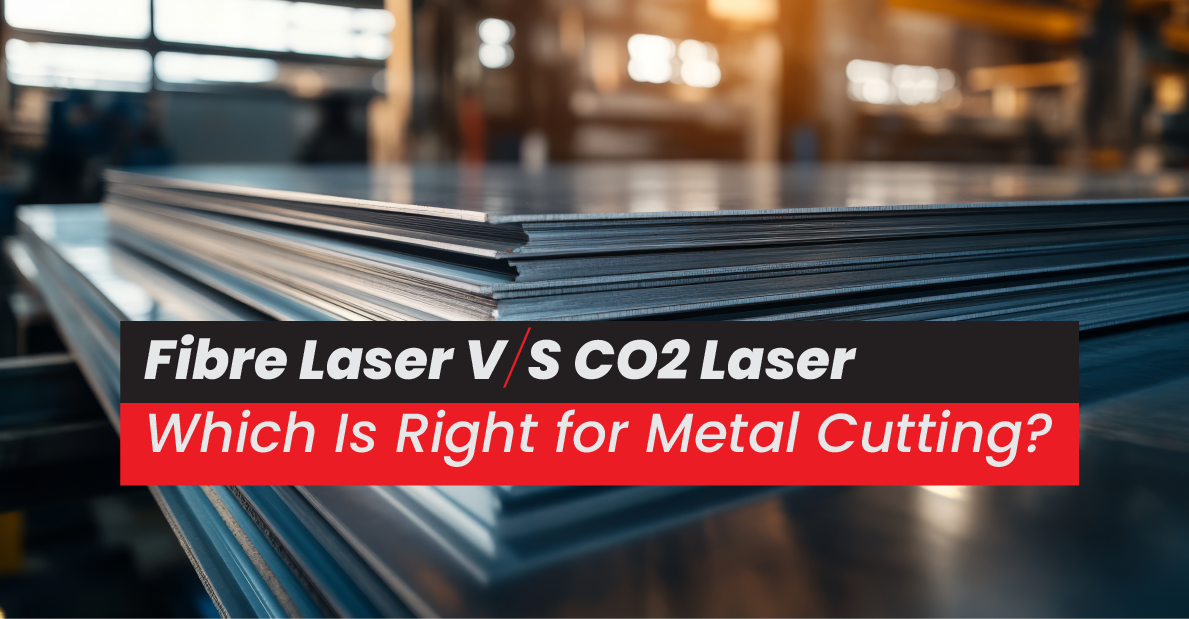
Fibre Laser vs CO2 Laser: Which Is Right for Metal Cutting?
Short answer: for cutting sheet metal, a fibre laser is usually the better choice today. A CO2 laser still earns its place when the job includes non-metals. The right answer depends on your material, thickness and the edge you need.
What is the difference?
Both are laser cutting processes. They differ in the laser source and the wavelength of light.
- Fibre laser: a solid-state source, with the beam delivered through optical fibre
- CO2 laser: a gas-based source with a longer wavelength
Wavelength changes how each material absorbs the beam, and so what each machine cuts well.
Which is better for cutting metal?
For most sheet metal, fibre lasers are favoured. Metals absorb the fibre wavelength efficiently, so cutting is typically fast on thin to medium sheet. Fibre is also generally better suited to reflective metals such as aluminium, brass and copper, which can be difficult for CO2 systems.
When does CO2 still make sense?
CO2 lasers handle many non-metals well: acrylic, wood, MDF, leather and some plastics. If a job mixes materials, CO2 is often the practical option. Fibre is not suited to clear acrylic.
| Factor | Fibre laser | CO2 laser |
|---|---|---|
| Mild and stainless steel sheet | Strong choice | Capable |
| Aluminium, brass, copper | Generally better suited | More difficult |
| Acrylic, wood, MDF | Not suited | Strong choice |
| Typical use | Sheet metal fabrication | Mixed or non-metal work |
Results vary with machine, power, assist gas and material grade. Treat this as a guide.
Does laser type change tolerance and edge quality?
It can, but settings, material grade, thickness and part design matter just as much. Kerf, the width of material the beam removes, affects fit and fine detail, so consider it at design stage. See understanding kerf width in laser cutting.
How should you choose?
- What is the material, and is it reflective?
- How thick is it?
- Does the part need fine detail, such as small holes?
- What tolerance does the drawing call for?
- Will it be painted or powder coated afterwards?
Choose the process from those answers, not from the machine. That is how RhinoWorks works: in-house manufacturing, with architectural-grade specification sheets and tolerances, so the cutting method fits the drawing.
Where do laser-cut parts end up?
Everywhere from brackets and enclosures to gate panels and feature screens. For decorative applications, see DecorativeScreens.co.za. For larger fabrication, explore RhinoWorks’ manufacturing capabilities.
Not sure which process suits your part? Send your drawing, material and thickness, and we’ll advise before you commit to a quote.
Hashtags:
#LaserCutting #FibreLaser #SheetMetal #CNC #Fabrication #SouthAfrica
Get in touch with us to speak with our design team
+27 83 263 6337 today and let us assist you with any CNC, laser,
or custom engraving projects. Orders can also be placed via
Email: info@rhinoworks.co.za.
Visit our News Page to stay up to date with the
latest from Rhinoworks.
Follow us on Facebook
to keep up to date with more exclusive details about
Rhinoworks